Between two golf legends: Xcalacoco's privileged geography


There's a quick way to gauge the pedigree of a residential area anywhere in the world: look at who its neighbors are. Xcalacoco's speak for themselves.
To the north, minutes away, sits Mayakoba and its El Camaleón course, designed by Greg Norman: the first course in Latin America to host an official PGA TOUR event (2007) and the only course in the world to have hosted PGA TOUR, LIV Golf, and LPGA tournaments. Every year, the world's top profesional golf broadcasts put this neighborhood on screen, surrounded by the most awarded hotels in the Mexican Caribbean: Rosewood, Fairmont, Banyan Tree, Andaz.
Inland, Gran Coyote Golf Club, designed by Nick Price, completes the pair of courses that make this corridor the epicenter of golf in the Riviera Maya. Xcalacoco sits literally between the two: a coastal strip of jungle and white sand flanked by two championship courses bearing the signatures of legends.
This geography isn't a decorative detail, it's an economic indicator. World-class golf corridors anchor real estate value in every mature market on the planet, from Scottsdale to Marbella, from Pebble Beach to Casa de Campo, because they attract higher-net-worth buyers, sustain premium hotel rates, and help keep the area from overdensifying. Mayakoba set that standard in the Riviera Maya two decades ago; Zona Diamante, with Xcalacoco at its center, is its natural extension.
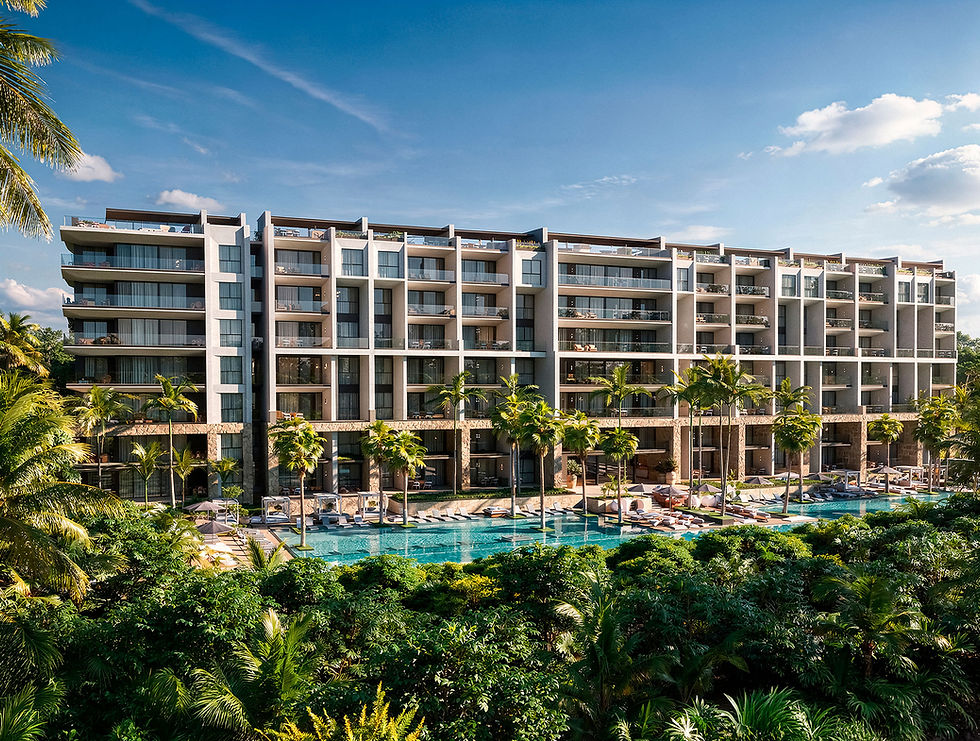
Add to the golf lifestyle what already exists inside Xcalacoco itself: a private beach club on the sand, a retail plaza with dining and entertainment, cenotes and jungle within walking distance, and Fifth Avenue ten minutes away for anyone who wants to soak up downtown energy and come home to quiet. It's the combination that defines the great residential micro-destinations: the city close by, but not on top of you.
Living between two golf legends, 600 meters from the Caribbean, in the growth zone of one of the most dynamic cities in Latin America: that's the offer. Twenty years ago that sentence described Mayakoba, and it seemed out of reach. Today it describes Xcalacoco, and it's still available.


Comments